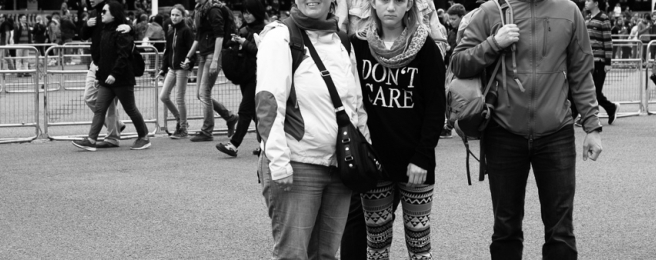
Everybody Loves Big Ben

Big Ben.jpgThe best view of Big Ben is had from the Westminster Bridge.  One can see the magnificence of the entire structure looking down river.  Across the other way is a view of the monumental ferris wheel.

The day was pleasant, the sky gray, many steps were made starting at Montague Street by the British museum down to Buckingham palace, meandering back up through the quaint streets of London through Covent Garden, much to see along the way.

Like any big city of interest many people are from other lands, but if you look somewhat confused with a map in your hand usually a Londoner will come along and offer their help.  In general the Londoners are extremely open, friendly and curious about you, especially when they hear your american accent.  Their spirit is genuine.  They appreciate a tip but it isn’t the reason they serve.

They know

Only the animals, and small creatures, know first, when an earthquake is going to strike.  The horses neigh, the cats meow, and the dogs bark.  They all run around like crazy because, unlike humans, they innately understand the tremblings of the earth.

Roots, and Heroic Westward Movement

Hamlin expresses love for his beloved Green Coulee, nestled in the hills of Wisconsin, the poetic influence this had on growing up in this land, and the characters of his grandparents who originally settled in these parts. He is a blend of the McKlintock’s country nature, and the refined educated Garland’s, who migrated from the East, in Maine. He appreciates the literary background handed down to him from his father Garland’s Pilgrim ancestry.

A noticeable theme, however, in Garland’s story, is his great appreciation and sympathy for the life his mother has to lead, and her ‘silent dignity’.  A McLintock, for Hamlin his mother embodies the Celtic culture.  She is a ‘wordless poet, a sensitive singer of sad romantic songs.’  He is aware of the the injustices she must endure as a married woman.  She has no choices, no say, but simply does what needs to be done to serve the the farming family.  Yet, she does have a say in the raising of the children, and guiding their moral instincts.

The injustices Hamlin’s mother endures in his eyes, happen first when his father goes off to fight in the Civil War.  Ironically, Hamlin views this as a desertion of his family, and misplaced heroism, rather than a duty to Mother Country.

What sacrifice- what folly!  Like thousands of others he deserted his wife and children for an abstraction, a mere sentiment for a striped silken rag- he put his life in peril.  For thirteen dollars per month he marched and fought, while his plow rusted in the shed and his harvest call to him in vein…

Dim pictures come to me.  I see my mother at the spinning wheel, I help her fill the candle molds.  I hold in my hands the queer carding combs with their crinkly teeth, but my first definite connected recollection is the scene of my father’s return at the close of the war.

With my interest in emigration to and within the United States, derived from my own parent’s families, who came from first emigrant backgrounds of Puritan, and New World French Quebec, I am intrigued with Hamlin’s poetic view of his world, and how his being a product of a ‘heroic westward movement,’ informs his literary creativity.  He uses this fountain of inspiration to brilliantly carry on with a first person story as “A Son of the Middle Border.”  Let’s see what happens next.
 

A Son of the Middle Border

Hamlin Garland speaks of what it was like living with Native Americans in Wisconsin as a young boy in 1864.

Only two people lived above us (from the valley), and over the height to the north was the land of the red people, and small bands of their hunters used occassionally to come trailing down across our meadow on their way to and from LaCrosse, which was their immemorial tradepost.

Sometimes they walked into our house, always without knocking_but then we understood their ways. No one knocks at the wigwam of a red neighbor, and we were not afraid of them, for we were friendly, and our mother often gave them bread and meat, which they took (always without thanks) and ate with much relish while sitting beside our fire. All this seemed very curious to us, but as they were accustomed to share their food and lodging with one another so they accepted my mother’s bounty in the same matter-of-fact fashion.  ‘Home from the War’

Chapter I Home from the War

Taken from “A Son of the Middle Border” by Hamlin Garland

All of this universe known to me in the Year of 1864 was bounded by the wooded hills of a little Wisconsin coulee, and its center was the cottage in which my mother was living alone_my father was in the war.  As I project myself back into that mystical age, half lights cover most of the valley.  The road before our door stone begins and ends in vague obscurity_and Granma Green’s house at the fork of the trail stands on the very edge of the world in a sinister region peopled with bears and other menacing creatures.  Beyond this point all is darkness and terror.

Luna

DSC_1592-1
Luna, at the Sea

Made a journey down a winding road, to see an old friend, and a dog named Luna.  Near the ocean we stayed, watching the waves, come and go.

On the morning walk with the dogs at the beach, the tilting fence glistened in the sun, with sand at her feet, and budding rose bushes of the dunes scattered round.

Time was approaching the hustle and bustle of beachgoers.

The afternoon sun beat down, where the children frolicked at the shore, with mother and father at their sides.  They built castles in the sand, unfettered by the rough play of canines of the early morn.

What was Luna thinking, as she lay at home?

Luna spent the day, dreaming of her four legged friends, from whom she would steal balls and sticks, and of how they rolled raucously in the sand.

Then a swim!

Daybreak returned and Mother Nature called Luna back out to play.  Alone she could not go, so she got up and wagged her tail, and sniffed and licked the sleepy face of my friend, to start another day, all over again.

Morning Fog

Morning fog,

veiled over the trees of the forest,

like a sheer silky sheet.

White,

vaguely opaque,

the sun glares through your weave.

The insistent caw of the crow,

alongside the ticking clock,

subsides.

Expression was made.

Need fulfilled.