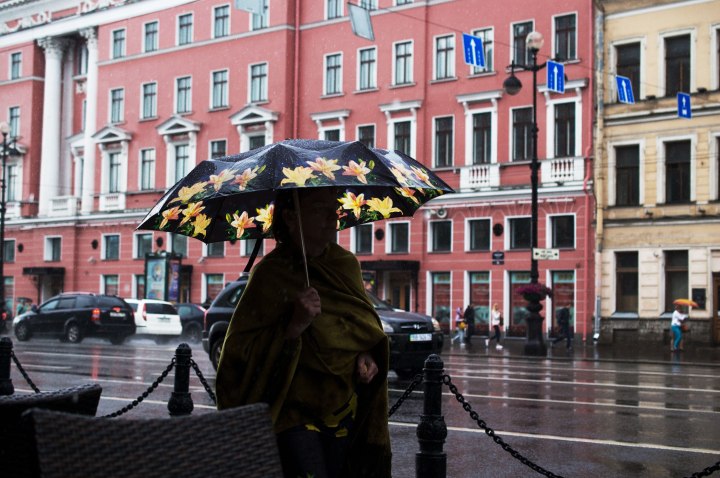
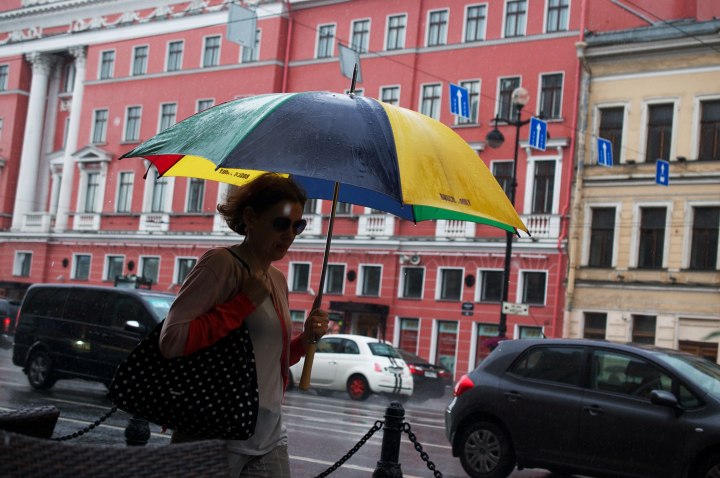
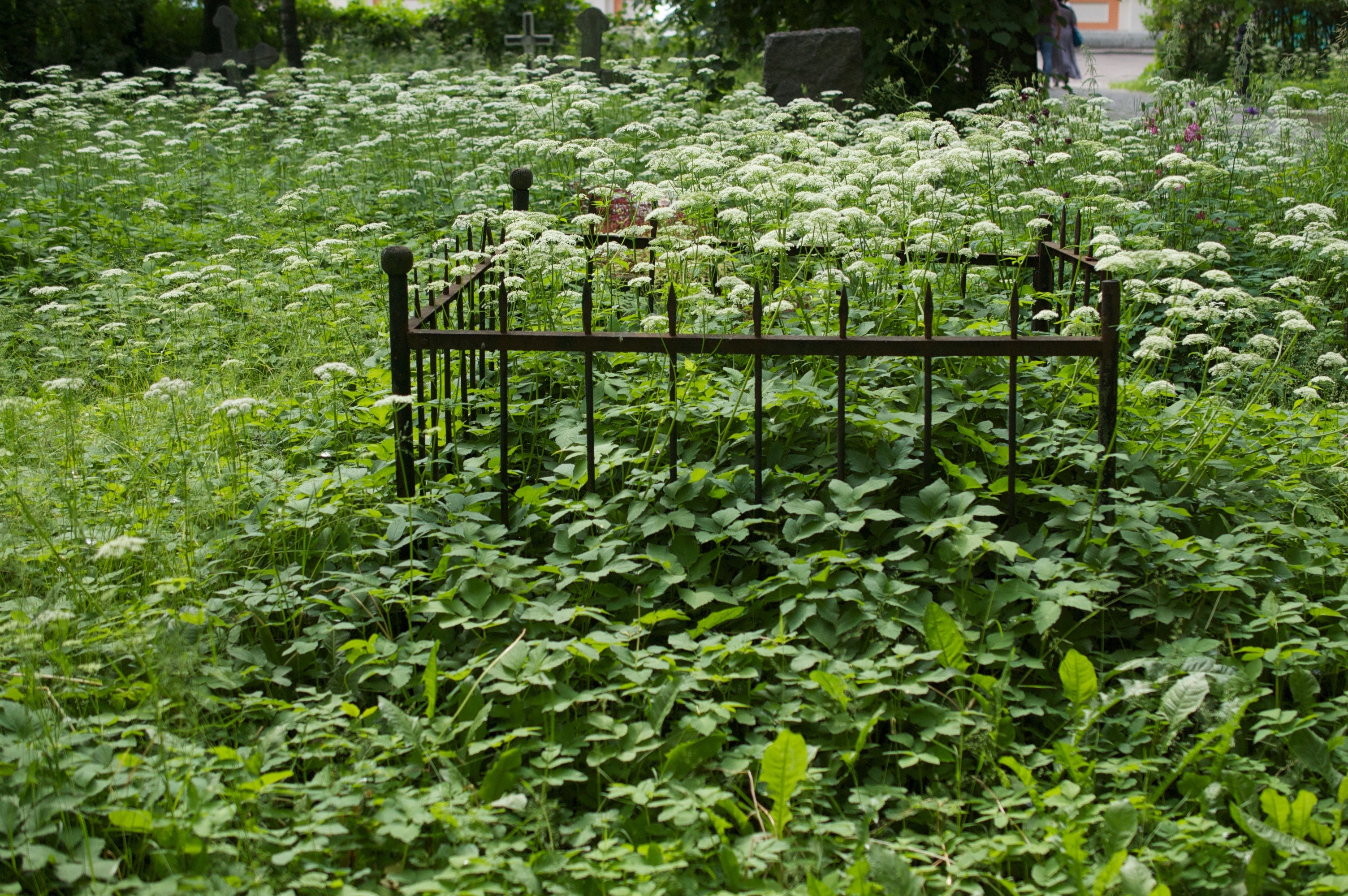
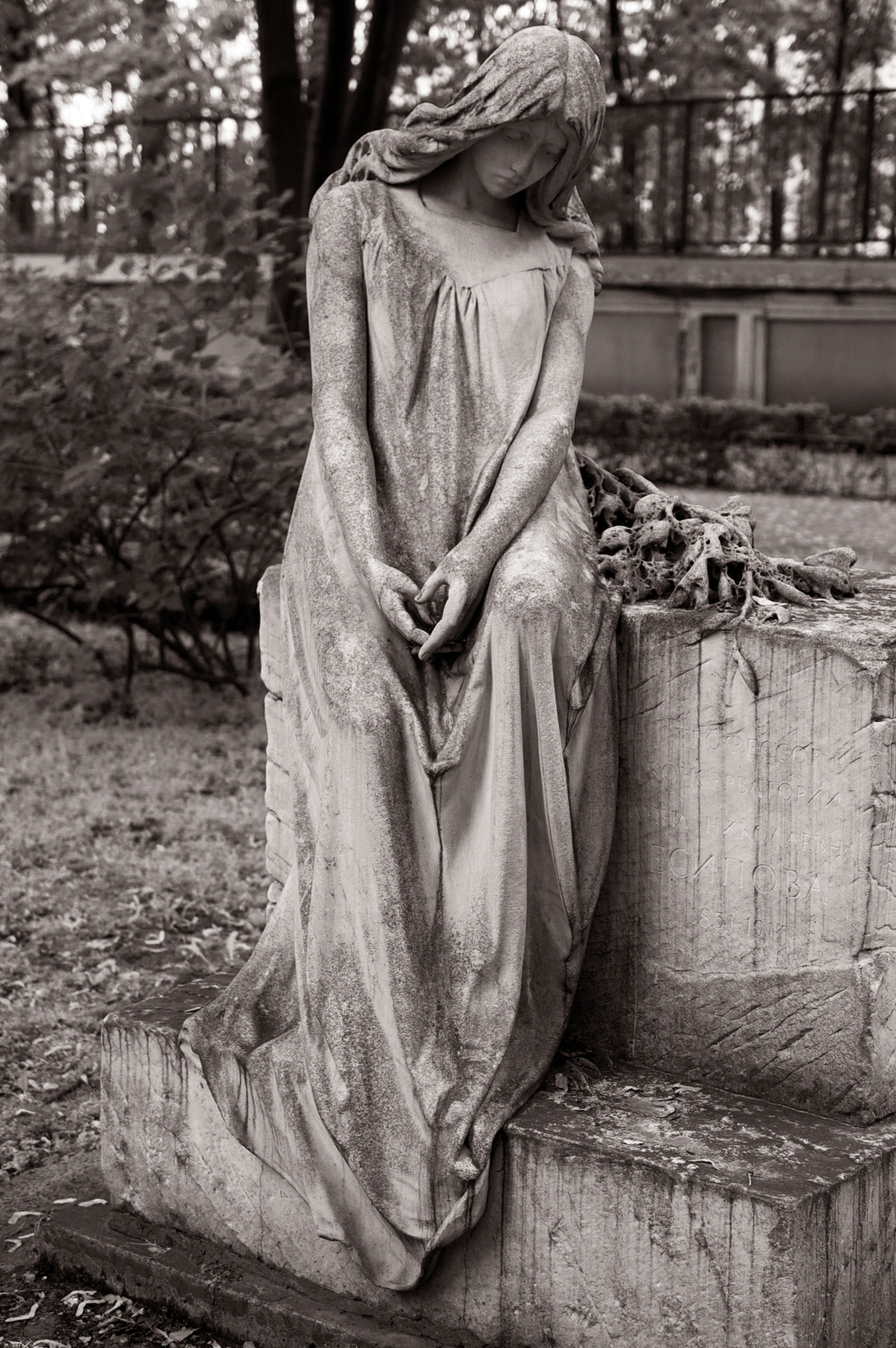
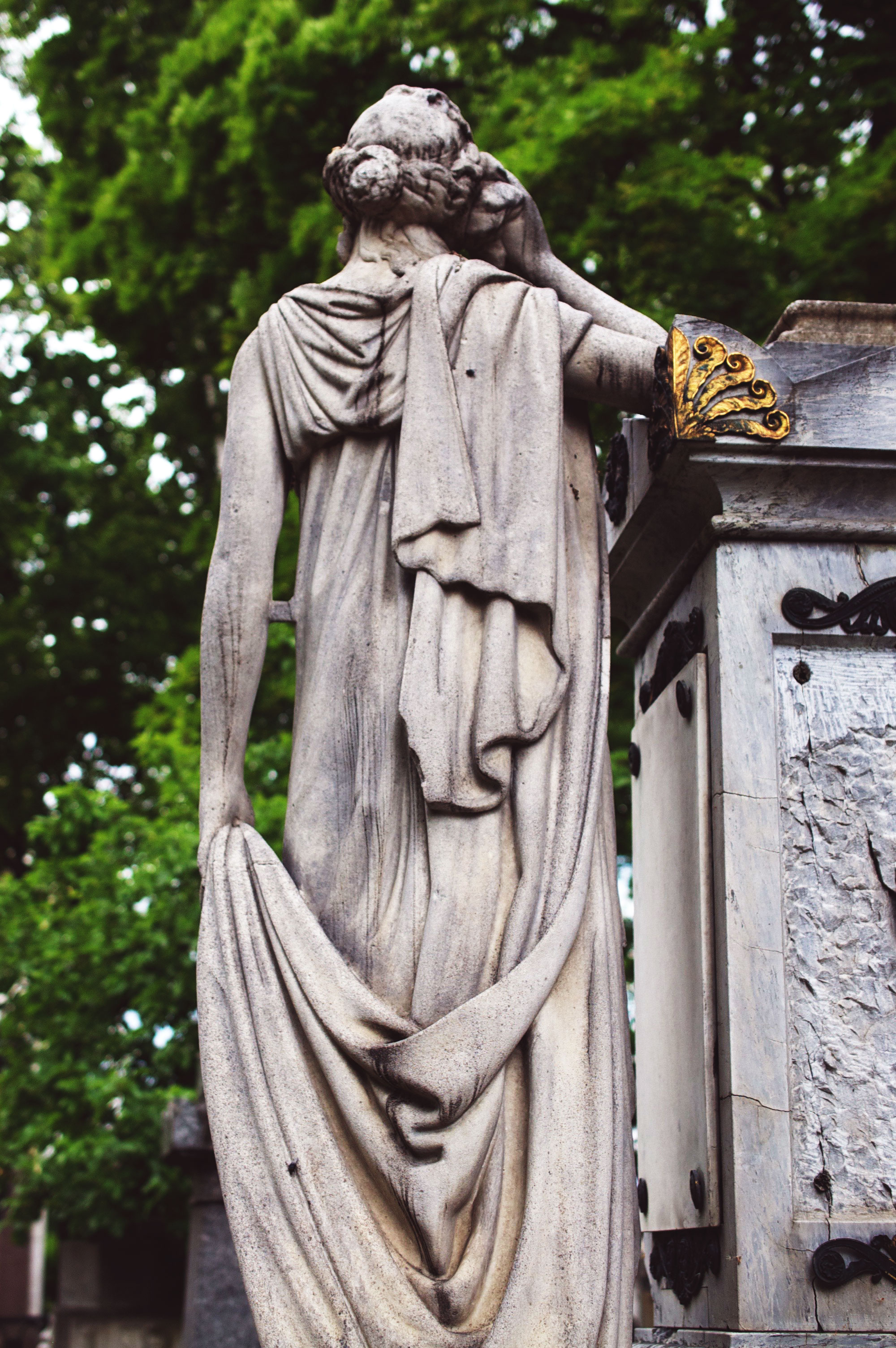
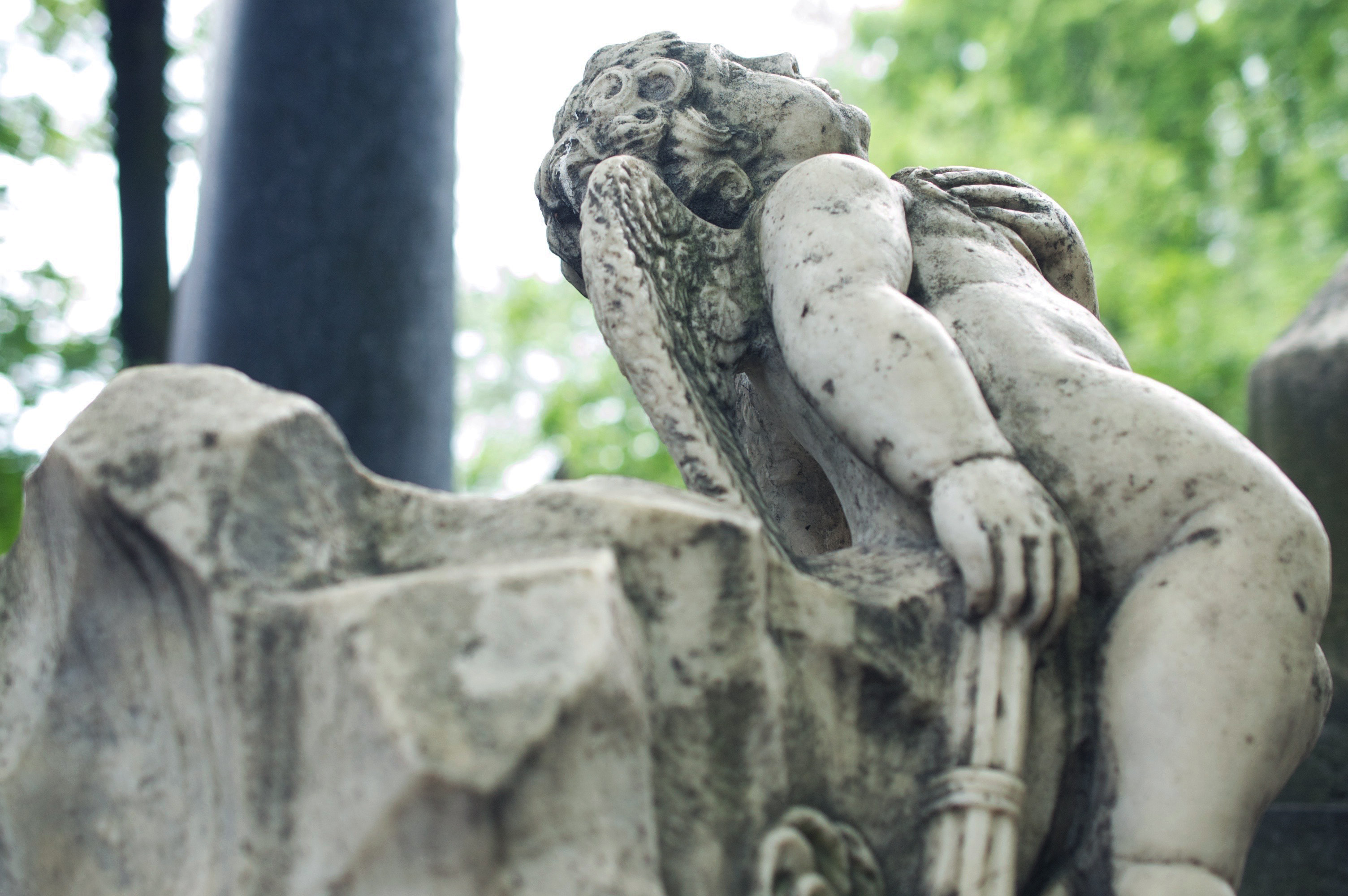
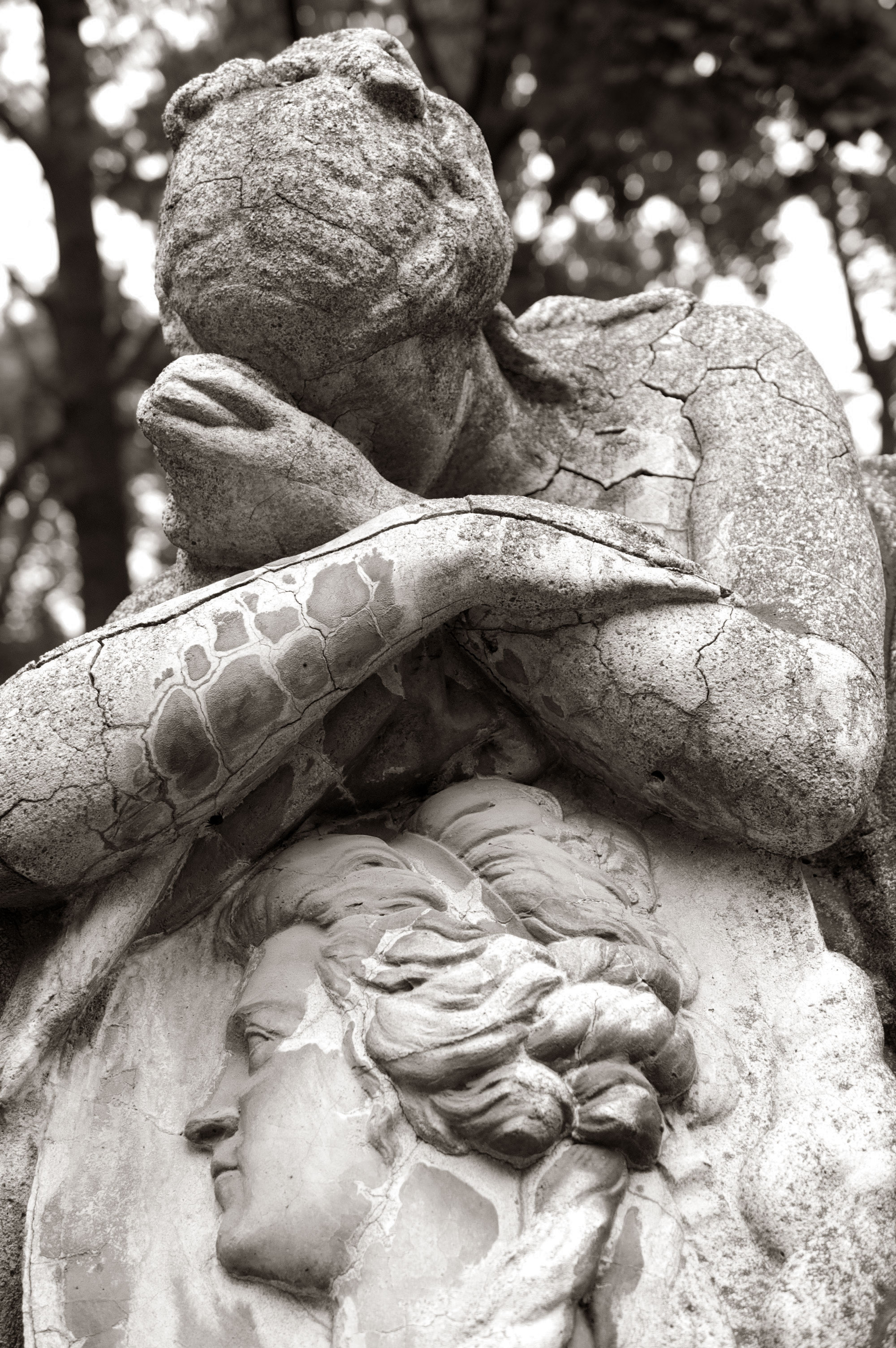
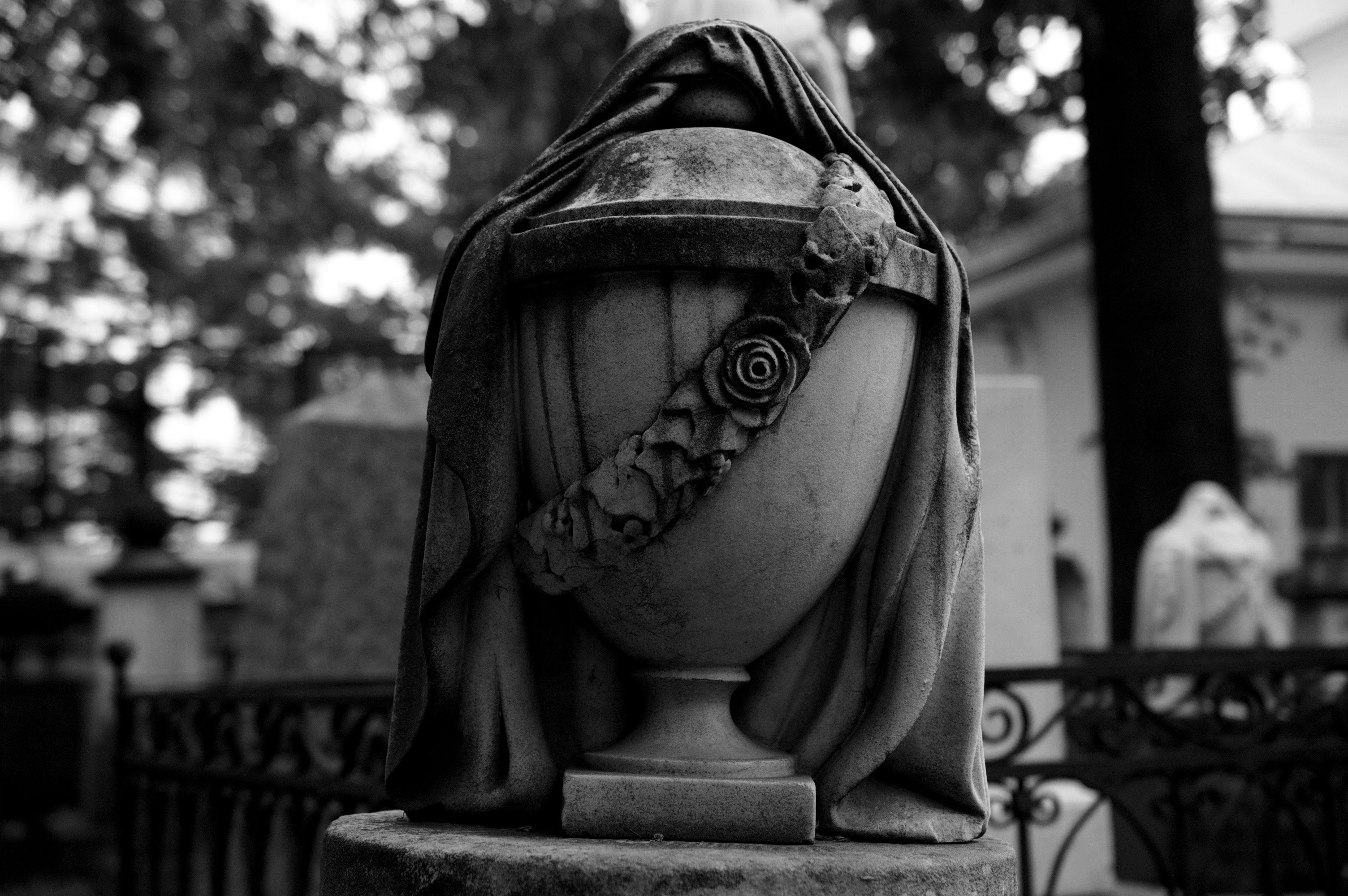
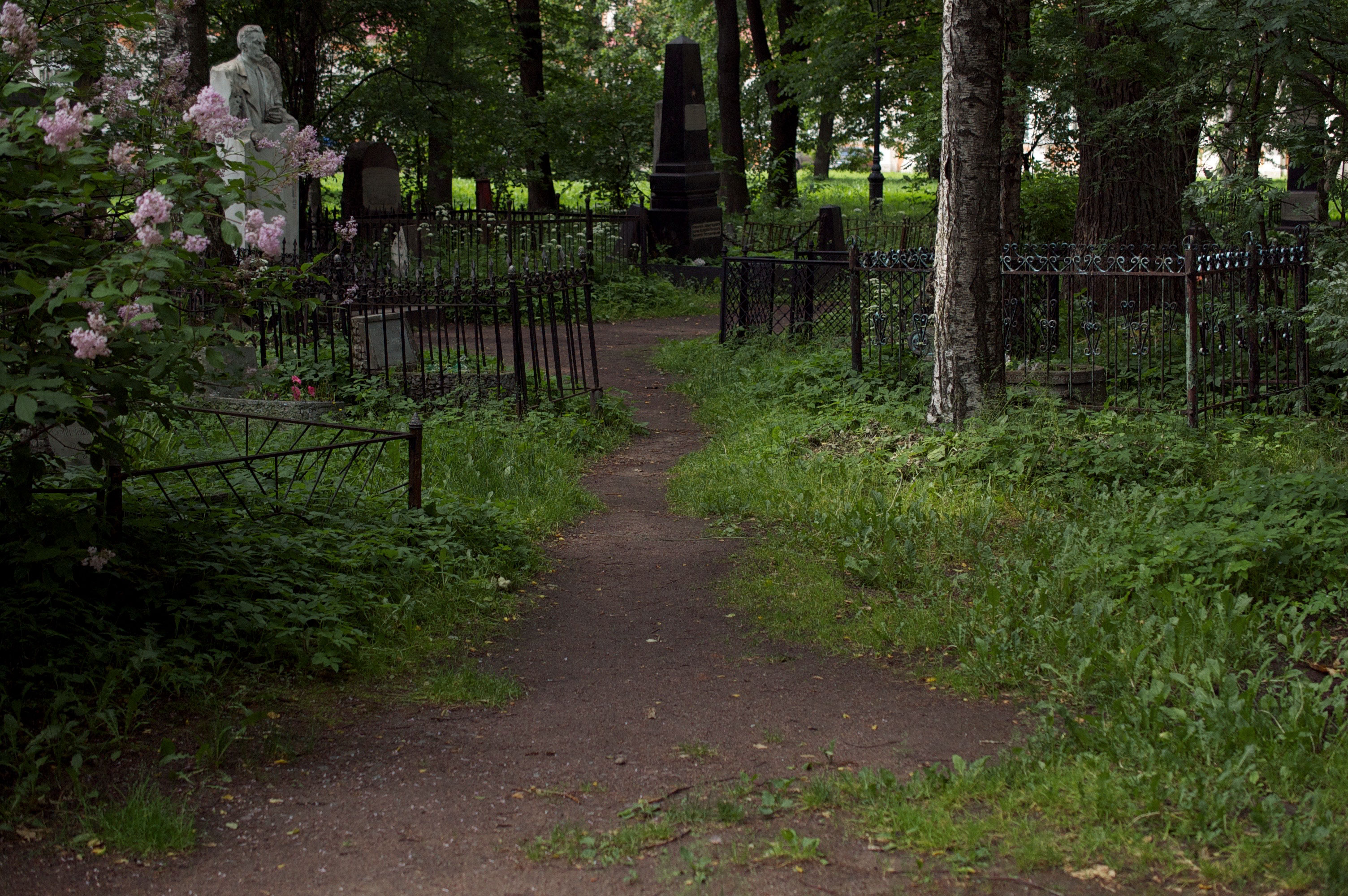
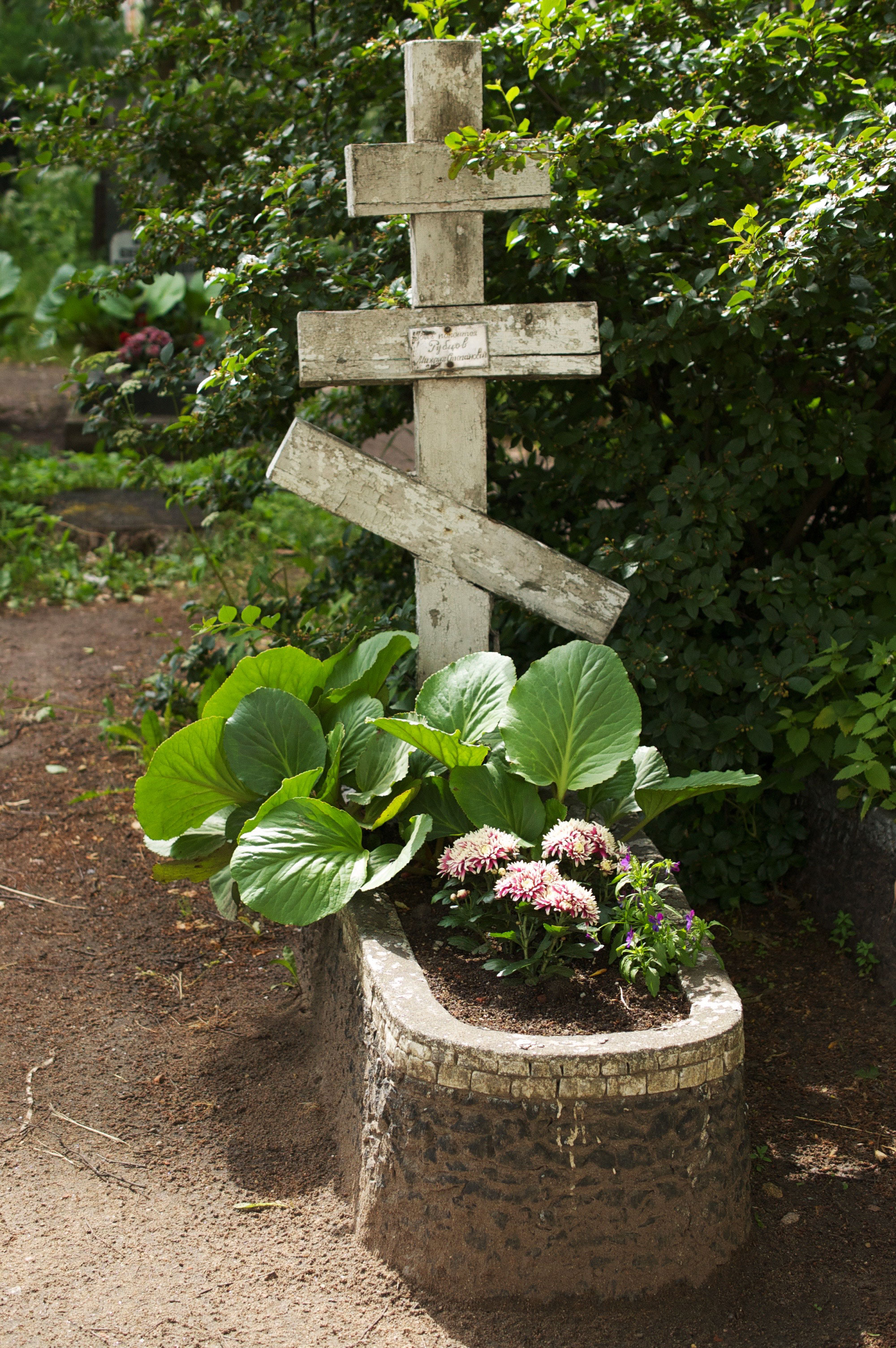
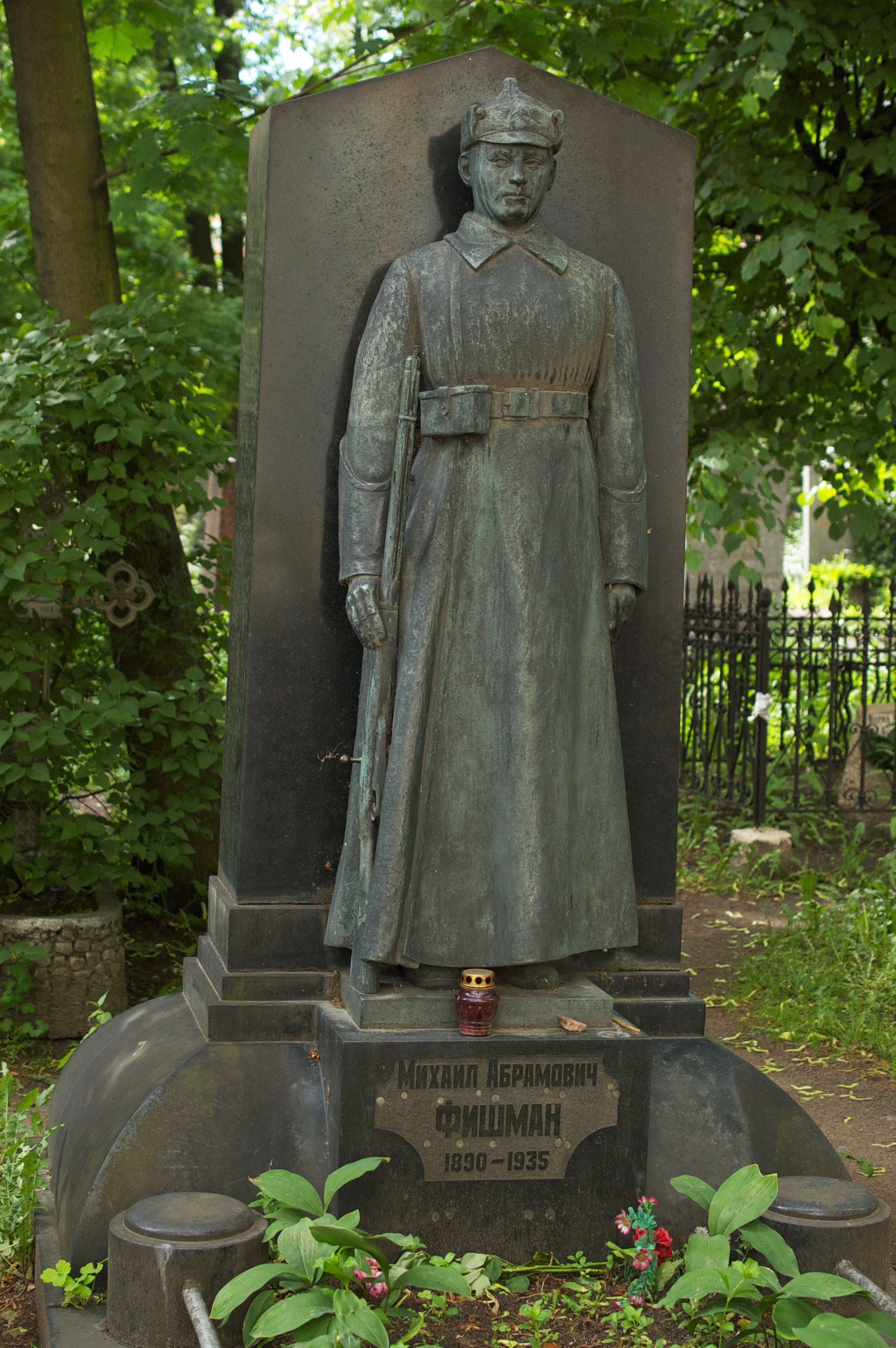
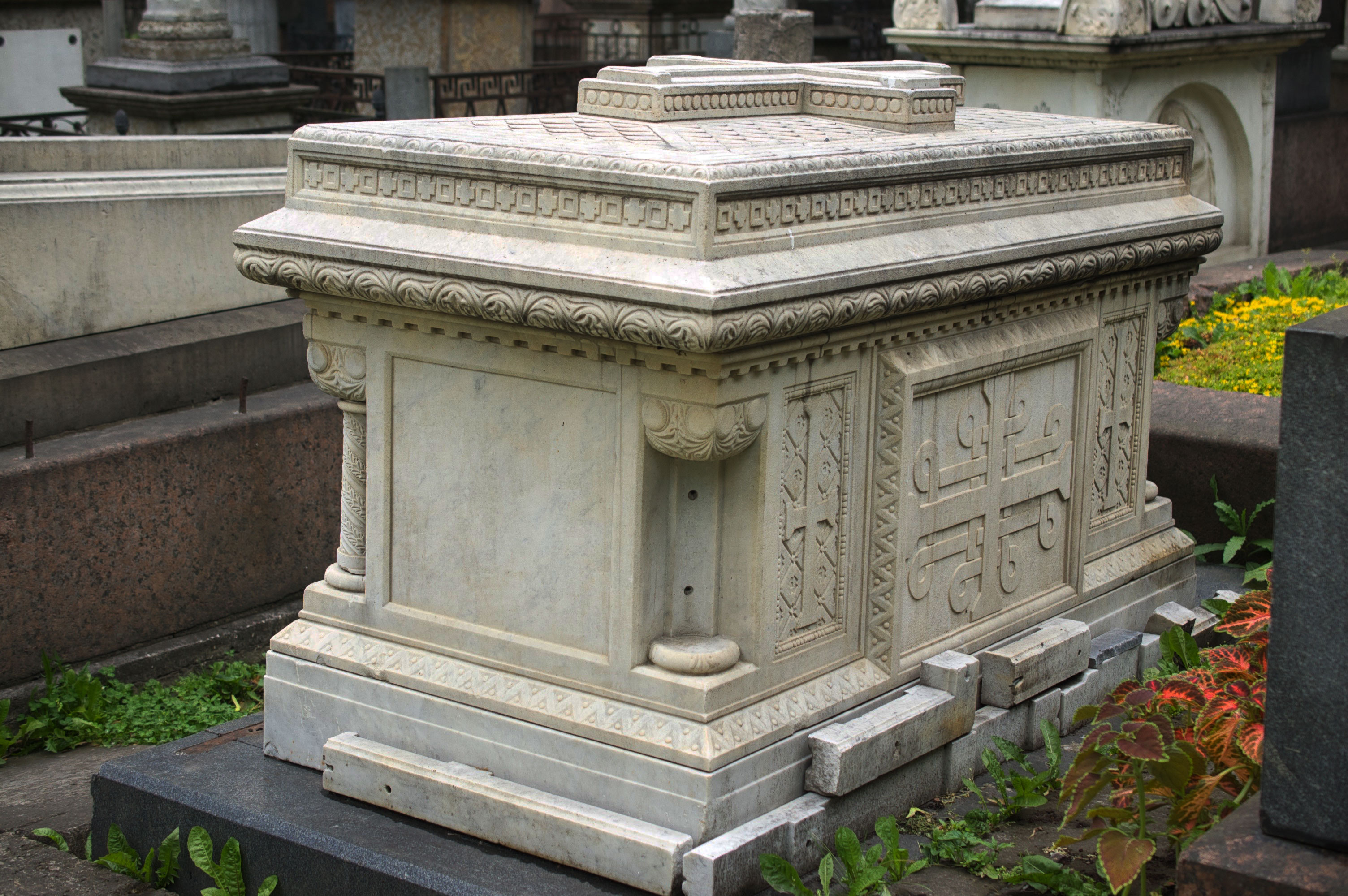
The Alexander Nevsky Monastery is located in St. Petersburg, Russia. The surrounding grounds contain four sections of cemeteries and is an extensive compound of open spaces with broken crosses, areas with impressive funerary sculptures, a section for academics, writers and intellectuals, and a section for Communists. The monastery is named for the Medieval prince, Alexander Nevsky a Russian hero who lived from 1221 to 1263. Nevsky was canonized a Saint in the Russian Orthodox Church.
Please click on the image to view the gallery.
OvergrownDowncastWoman wearing a Roman chitón, palla, or stola.CupidMourningProtector of the UrnStylized urn with cloth and garlandStepping stonesA Russian intellectualGated grave with wrought ironBroken CrossPathwayFieldSimple CrossA communist soldierCupid Heads at the base of a CrossEerie crack in a sarcophagusWhatever floats your boatEntrance to the Nevsky Monastery“He who lives by the sword shall perish by the sword.” Mathew 26:52Asian InfluenceFlower guarding the GravesArtistic sculpture perhaps eroded by TimeSculpture of a seated woman on a stone
A complementary colorized photo by friend, David Dreimiller of the original monochrome, enhances the women’s faces and the distinct differences in the color and detail of their dresses.
Ten months ago in May of 2021, I was reading a book called “Belles of New England,” by William Moran. I selected this book out of respect for my Great Grandmother, Emilie LaHaie, who migrated to Maine around 1873 with her parents, two brothers, and sisters. In the photo above Emilie is standing second to the left in the back with her seven sisters and mother, Julie Desfosses. It’s likely her wedding day. Although Emilie and her sisters were of French Canadian stock, her initiation into American life began when her mother and sisters started working in the New England mills. Emilie remembered before she died in Turtle, Wisconsin what it was like to work from dawn until dusk in the mill at age twelve years old, and when she came home was obliged by her mother to spend the evening in prayer. She worked hard like this until she married Delphis DuBois in Worcester, Massachusetts in 1884. Emilie and Delphis subsequently migrated to Wisconsin, along with all her sisters, mother, and one of her brothers, Frank LaHaie. They spoke French but not English very well, nor did they read or write either language, with any fluency to speak of. To avoid isolation and culture shock, it was extremely important the entire family lived in close proximity to each other to comfort, support and keep each other company.
I let them be called Belles of New England because in the book this referred to the young women of all ancestries who worked in the mills. Mary Lyon an advocate for women’s education and rights is quoted as saying about the women of the mills. “As other women vanished from the mill cities, they also left behind scant details of their lives except for their record as pioneers in American labor history.” They were as Mary Lyon said, ‘the bone and sinew and glory of the nation.’
Emilie’s life after the mill was spent in having numerous children, and continued hard work on the family farm. Fortunately she had the presence of her daughters and sisters for care and help, but her life passed throughout the decades at a great price. When she told her stories about the mill in her last years of senility, it was repetitive, and grandchildren and great grandchildren weren’t very good at lending an ear. But the stories were told and people like my mother listened and showed an interest. She always told me Emilie worked in the mill in Fall River, Massachusetts, and other places too. In telling, we remember. Je me souviens.
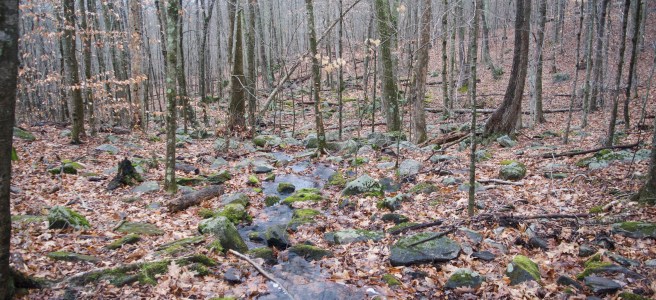
A picture I took the day before yesterday on a hike. This is about a mile from my house through the woods. Running off the wetlands, a stream of water runs under a foot bridge right before a walk up a huge hill. At the top of the hill you can look across the valley to the other hills, almost mountains. One spring red trilliums popped up along the rivulet. The rocks in the area are now covered with moss.
A riveting seasonal poem, depicted on a page from “The New Book of Days” by Eleanor Farjeon. The author uses words of color, and sensory language to personify “October” in the seasonal passing of time.
NOT LOST BUT GONE… Sometimes a poorly exposed photograph is worth the effort. In this case I was able to bring back the memory of three small children, in a small way. Here we have the grave of Little Mary Smith (1865), Little Fannie, and Little Someone Else. The inscriptions were hard to read, but with a bit of tweaking, I was amazed how the letters and words become clearer, until “Voilà!” You have a phrase. Plainfield, Connecticut August 26, 2016
Family Picnic for my dad, home on furlough from the WWII, before he was off to Europe. 1944, nine years before I was born. My mom is in the picture, but she and dad weren’t married until he returned from the war. If I could bring them all back I would. Might they be looking down on me and wondering, what I will do next? I’ll never know, and they will never be able to tell me if they think I’m doing the right thing or not. I only have to go by what they taught me and trust their judgement when they were alive. In this way they aren’t really gone at least in my heart and mind.
Looking down at the cliffs that American soldiers climbed to their death.
Looking out.
Military Map
Map of military maneuvers.
Vantage point of the Germans as they waited for American troops to climb the falaise.
Map of Normandy invasion.
A map depicts the failed invasion by U.S. troops.
Normandy
A view of the American Cemetery in Normandy.
A woman walks through the graves of Jewish and Christian soldiers at Normandy.
These photos depict images from the Normandy and Brittany American Cemeteries in France, on a visit in 2014. Given that June 6th is the Anniversary of D-Day the pictures fittingly commemorate this tragic event. The American soldiers that arrived to Omaha Beach on the Normandy Shore and climbed the cliff to the ridge were sacrificed by the enemy waiting for them in silence.
Like all wars, we wonder why this one, WWII was fought. Of what was the American public made aware? If you look closely at the picture entitled “The List” you will see a series of names of ‘Calvadosiens Deportes Victimes.’ Calvadosiens refers to the people on the list who came from the Department of Calvados, Normandy, who were deported under the Vichy government, a part of the French government that sympathized with the Nazis, and supported the extermination of Jews. The engraving at the top of the list depicts a train track leading to a building. This was symbolic of Auschwitz, and what these Calvadosiens saw once they arrived to their place of death – the concentration camp. The people on the list may have been Jewish, Catholic, leaders of the French Resistance, or even gypsies: groups that were customarily taken away. Click on the photos, and view them in the gallery.