
Interruptions in Life

Reading can bring back memories, help to understand oneself with respect to the past, the present, and even give direction in life. It can stimulate the imagination and desire to create outside of a story, and make one’s own stories. “The Song of the Lark” strikes many such chords for me. Through Cather’s quiet introspective narrative tone, we watch the character, Thea Kronborg, grow into herself.

In Part II of the novel, Thea, with the encouragement of Doctor Archie, goes to Chicago to complete her musical education. While she takes piano lessons from Mr. Harsanyi, a Hungarian immigrant, she simultaneously sings in a choir for a church. Only by accident does Mr. Harsanyi discover that Thea is also a singer, possessing a beautiful, but untrained voice.

Life for Thea in the city takes on an aspect of drudgery and loneliness, feelings she never experienced growing up in Moonstone. She is the daughter of a Swedish minister and nonjudgmental mother, who believes in the power of fate. Back in Moonstone, Thea was a free-spirited girl, who carried around with her ‘under the cheek’ that inexplicable sense of innate happiness. Now in Chicago, that feeling has since dissipated, and been replaced by the routine of her music practice, and daily living.

One scene which recalls a memory for me is described in the opening passage of Chapter V, Part II:

By the first of February Thea had been in Chicago almost four months, and she did not know much more about the city than if she had never quitted Moonstone. She was, as Harsanyi said, incurious. Her work took most of her time, and she found that she had to sleep a good deal. It had never before been so hard to get up in the morning. She had the bother of caring for her room and she had to build her fire and bring up her coal. Her routine was frequently interrupted by a message from Mr. Larson summoning her to sing at a funeral. Every funeral took half a day, and the time had to be made up. When Mrs. Harsanyi asked her if it did not depress her to sing at funerals, she replied that she ‘had been brought up to go to funerals and didn’t mind’.

It’s this last scene that struck home with me, because I too was brought up going to funerals, to sing the Requiem. You see, the school I went to was attached to the Catholic Church. The best part of each classroom were the very large windows that looked out onto the grass and swing sets. The children could also watch the cars that drove by on the driveway, as they circled the school and the church. When there was a funeral the procession with the hearse and all the cars filled with mourning family members would also go by. This was our indication to go into the church and sing. We went to Mass every morning anyway, and sang in Latin, but when someone died, it was different. It was a solemn time, and we had to show the greatest respect.

Like Thea, going to sing for a funeral was not a task of drudgery, and even though I look back and realize it wasn’t what most normal children had to do, I didn’t mind. I enjoyed singing, that much, and looking at the beautiful stained glass windows inside the church. Similarly to Thea, these frequent interruptions to go sing at a funeral, were a real part of my school day life. As school children, it was our place to attend to the matter, give our voices to the sad family, and then get on with life. We learned to take the good, with the bad, and the sad, with the happy, and always had that something under our cheek to keep us company, even if it seemed to step out for awhile.

Although, I haven’t finished the story yet, I imagine that Thea has a lot of growing to do, that she will have to struggle even more; But if I know Willa Cather, her heroine will overcome, whatever steps in her way. Thea will undoubtedly be rewarded for her struggle, and be resurrected to an even more dignified level of being.
Finding success, in the face of failure.

In Part IV, ‘The Ancient People’, of Cather’s “Song of the Lark”, Thea Kronborg, having become ill and stressed by her pursuit of musical success in Chicago, is embarking upon a trip to Arizona, through Navajo country.  Sent by her new found Polish friend, Fred Ottenburg, a sort of patron of the musical arts, Thea is once again, off in search of herself. Her good fortune to be taken under the wing of this man has enabled her to go on this retreat. Her destination is to stay in Panther Cañon, where the Polish man’s father owns a ranch filled with Cliff-Dweller ruins.  Thea, finding a dismal life in the Windy City, where she is passed on from music teacher to teacher, teaching also, as a way to make a living, enduring a life of personal failure, by living in dusty dirty and mold infested boarding houses, is more than happy to make the trip.  The ending of the first chapter, from Part IV, describes the transition Thea is making, where failure rescues her from an undesirable urban existence.

So far she had failed.  Her two years in Chicago had not resulted in anything.  She had failed with Harsanyi, and she had made not great progress with her voice.  She had come to believe that whatever Bowers had taught her was of secondary importance, and that in the essential things she had made no advance.  Her student life closed behind her, like the forest, and she doubted whether she could go back to it if she tried.

Probably she would teach music in little country towns all her life. Failure was not so tragic as she would have supposed; she was tired enough not to care.

She was getting back to the earliest sources of gladness that she could remember.  She had loved the sun, and the brilliant solitudes of sand and sun, long before these other things had come along to fasten themselves upon her and torment her.  That night, when she clambered into her big German feather bed, she felt completely released from the enslaving desire to get on in the world.  Darkness had once again the sweet wonder that it had in childhood.

With two more Parts left to the book, i.e., “Dr. Archie’s Venture,” and “Kronborg,” it will be interesting to see what lies in the future for Thea. We’ve seen this young Swedish woman, move on from a small girl in her hometown of Moonstone, fight for survival in the big city, try to make a musical career for herself, and now, take an R & R in the South West. Will she follow a path of enlightenment? Will she continue to conclude that success is a many faceted experience, and that it is necessary to face failure, before one comes to find purpose and meaning in life?  Will Thea realize that happiness is derived from other vital driving forces on the journey?   One hundred and sixty pages will tell, what’s in store for the end.

With Love, Lizzie

As the train sped away to Minnesota,
Her message was loud and clear:

‘Crete,

I left, too sick to say goodbye.

With Love,

Lizzie’

The 20th day of July,
in 1870 she died,
at 37 years.

Lost letters, and diaries, her story they tell,
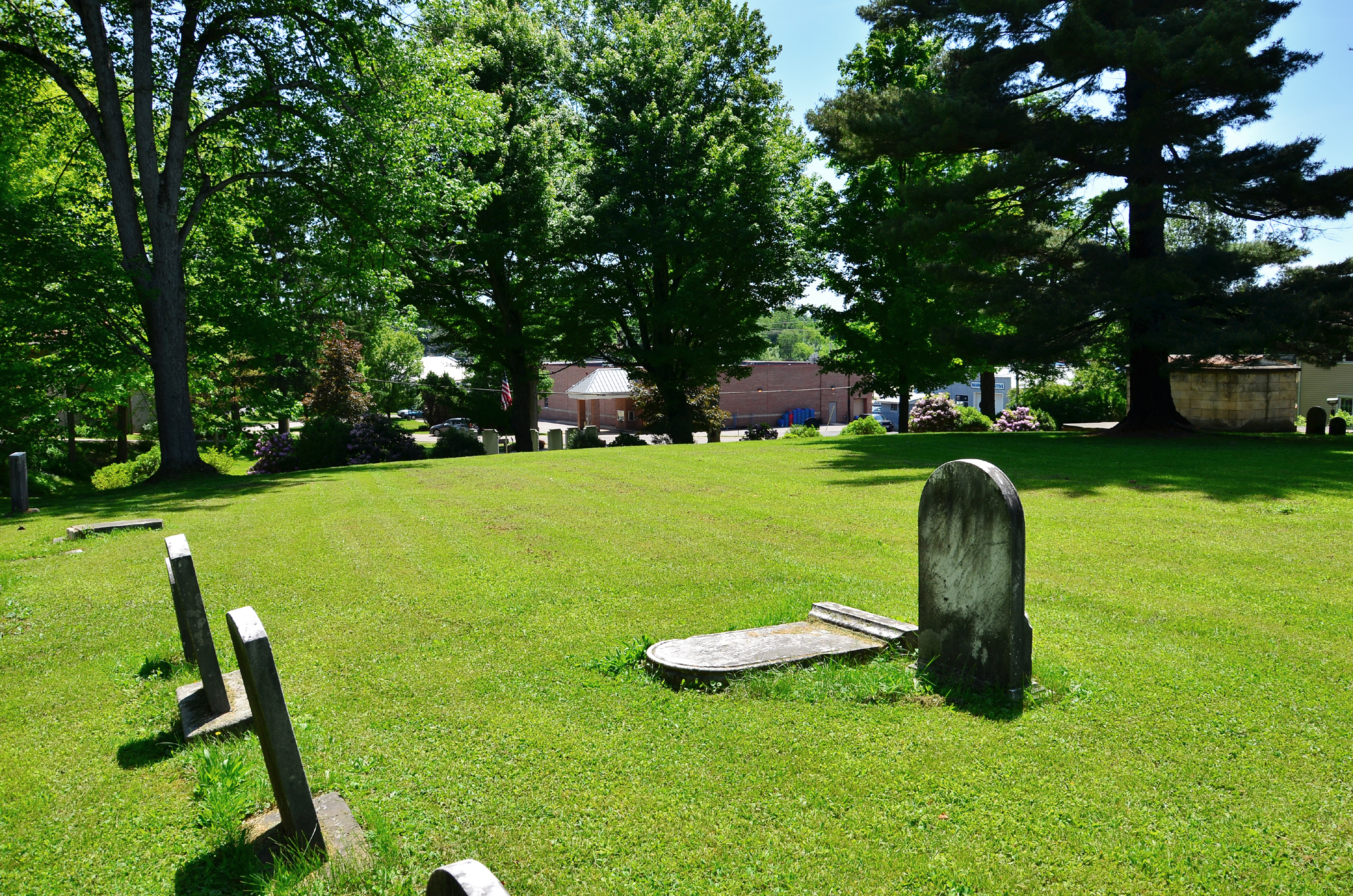
They say, ‘Lizzie’s body, lies here’.

By TiffanyCreek

Baptist, another view DSC_4436

Photo by Dave Dreimiller

Lizzie Atwood was best friends with Lucretia Rudolph Garfield. (“Her worries, Crete took away, Lizzie loved her, until she died”). Lizzie married Arthur Pratt, and had two daughters named Mabel and Cornelia. Her mother and father were Elizabeth Yeatman Garrett, and Edwin Atwood, of Garrettsville, Ohio.

“I cannot not sail”

While the grogginess of waking comes over me, on this gray rainy morning in early October, an autumnal mood hangs in the atmosphere. Yesterday, we were forewarned of the coming of Joaquín. Beware! A huge hurricane was riding the waves of the sea!  Relieved, we were spared from another big one.

With the season in our midst, I remember the occurrence of Hurricane Gloria, at the end of September of 1985.  Coming from the Midwest, this was the first hurricane I experienced in my life.  Similarly, my husband came from the Ring of Fire, where earthquakes are the norm. In light of the newness of it all, fear was not on my agenda, having lived through many a Wisconsin tornado and blizzard.

The morning before Gloria’s expected arrival, on the advice of a vigilant neighbor, I hurried out to buy batteries, only to find every store, wiped out of supplies. No new batteries, and no duct tape, to secure the windows. Making do with the Duracells, found around the house, I prayed the panes wouldn’t break. Well, the storm, a lesson in science, was proven to be an all day process, moving into the next. As I stood, looking out the divided lights, I saw the trees bend and sway back and forth. They moved 180 degrees, from one side to the other, like sticks of licorice. The daunting speed of the wind caused the trees to crash to the ground around the house. One, two, three and another, uprooted from the base, they fell with a huge thump. The house was being spared, except for the electrical box. Without warning, a trunk like branch from a tree fell on the wires extending to the street, and the metal case was abruptly severed from the clapboard siding, strewing live wires all over the ground, outside.  Then, an incredible stillness enveloped the air as the eye of the storm passed overhead, only to be followed by a more gently flowing wind. Nearing the end, Mother Nature had orchestrated a tremendous performance, with her emissary; The great and powerful Gloria!

Life was disrupted for several weeks into the month of October.  The clean up was slow going, and the crews worked morning and night to restore electricity. The public waited patiently, as fleets of trucks, were sent from Quebec. They were like the Messiah, coming to bring everyone out of the dark.  A heavily wooded state, storms inevitably pose a problem for Connecticut, and its residents can pretty much expect to cook with propane, and burn the lamplight oil.

Well, we survived. I look back, with gratitude that I had no small children to watch out for, and, there was no loss of life, at least that I know of in Connecticut, or New England.

Sitting on the Atlantic Coast, we wait patiently, and ponder, as hurricane season descends upon us. Will the brewing storms perish at sea, like Joaquín, or should one  “batten down the hatches’, before it’s too late? In my quest for enlightenment, I ask myself, “What kind of a sailor will I be in the next storm?  Will I have duct tape and batteries, and jugs and jugs of water?  Will my bathtub be filled, and overflowing?”   The question is not; Will another storm blow in? but rather, How can I ever be prepared? Having not the answers, with affection, and humble regard for the unknown, I recall the beloved words of E.B. White. “I cannot not sail.”

Nothing is far

Nothing is far and nothing is near, if one desires. The world is little, people are little, human life is little. There is only one big thing – desire. And before it, when it is big, all is little. It brought Columbus across the sea in a little boat, und so weiter.

Wunsch, Thea Kronberg’s music teacher in “Song of the Lark”.

In her heart, was it, or under her cheek?

Thea was surprised that she did not feel a deeper sense of loss at leaving her old life behind her.  It seemed, on the contrary, as she looked out at the yellow desert speeding by, that she had left very little.  Everything that was essential seemed to be right there in the car with her.  She lacked nothing. She even felt more compact and confident than usual.  She was all there, and something else was there, too – in her heart, was it, or under her cheek? Anyhow, it was about her somewhere, that warm sureness, that sturdy little companion with whom she shared a secret.

When Doctor Archie came in from the smoker, she was sitting still, looking intently out of the window and smiling, her lips a little parted, her hair in a blaze of sunshine.  The doctor thought she was the prettiest thing he had ever seen, and very funny, with her telescope and big handbag.  She made him feel jolly, and a little mournful, too.  He knew that the splendid things of life are few, after all, and so very easy to miss.

Friends of Childhood Chapter XVIII “Song of the Lark” by Willa Cather

XII “Song of the Lark” by Cather

One July night, when the moon was full, Doctor Archie was coming up from the depot, restless and discontented, wishing there were something to do. He carried his straw hat in his hand, and kept brushing his hair back from his forehead with a purposeless, unsatisfied gesture.  After he passed Uncle Billy Beemer’s cottonwood grove, the sidewalk ran out of the shadow into the white moonlight and crossed the sand gully on high posts, like a bridge. As the doctor approached this trestle, he saw a white figure, and recognized Thea Kronberg. He quickened his pace and she came to meet him.

‘What are you doing out so late, my girl?’  He asked as he took her hand.

Marsha

Between light and shadow.

Your green eyes

with golden sparkles

glisten like diamonds

In the sky.

Your vulnerable soul stands

Between light and sombra

As sun shines through

The panes of glass,

behind which you stand…

Waiting for luck to come…

A prince from the Russian forest

Maybe…

Bearing the gift of love,

to fix your broken heart.

Yet,

the fat scowling man,

Shirtless at the top of the stairs,

Peers downward to the street, blowing toxic smoke

At us, in a sinister way…

Makes me afraid for you.

I want you to be safe;

And to know I love you.

TiffanyCreek