Roots, and Heroic Westward Movement

Hamlin expresses love for his beloved Green Coulee, nestled in the hills of Wisconsin, the poetic influence this had on growing up in this land, and the characters of his grandparents who originally settled in these parts. He is a blend of the McKlintock’s country nature, and the refined educated Garland’s, who migrated from the East, in Maine. He appreciates the literary background handed down to him from his father Garland’s Pilgrim ancestry.

A noticeable theme, however, in Garland’s story, is his great appreciation and sympathy for the life his mother has to lead, and her ‘silent dignity’.  A McLintock, for Hamlin his mother embodies the Celtic culture.  She is a ‘wordless poet, a sensitive singer of sad romantic songs.’  He is aware of the the injustices she must endure as a married woman.  She has no choices, no say, but simply does what needs to be done to serve the the farming family.  Yet, she does have a say in the raising of the children, and guiding their moral instincts.

The injustices Hamlin’s mother endures in his eyes, happen first when his father goes off to fight in the Civil War.  Ironically, Hamlin views this as a desertion of his family, and misplaced heroism, rather than a duty to Mother Country.

What sacrifice- what folly!  Like thousands of others he deserted his wife and children for an abstraction, a mere sentiment for a striped silken rag- he put his life in peril.  For thirteen dollars per month he marched and fought, while his plow rusted in the shed and his harvest call to him in vein…

Dim pictures come to me.  I see my mother at the spinning wheel, I help her fill the candle molds.  I hold in my hands the queer carding combs with their crinkly teeth, but my first definite connected recollection is the scene of my father’s return at the close of the war.

With my interest in emigration to and within the United States, derived from my own parent’s families, who came from first emigrant backgrounds of Puritan, and New World French Quebec, I am intrigued with Hamlin’s poetic view of his world, and how his being a product of a ‘heroic westward movement,’ informs his literary creativity.  He uses this fountain of inspiration to brilliantly carry on with a first person story as “A Son of the Middle Border.”  Let’s see what happens next.


A Son of the Middle Border

Hamlin Garland speaks of what it was like living with Native Americans in Wisconsin as a young boy in 1864.

Only two people lived above us (from the valley), and over the height to the north was the land of the red people, and small bands of their hunters used occassionally to come trailing down across our meadow on their way to and from LaCrosse, which was their immemorial tradepost.

Sometimes they walked into our house, always without knocking_but then we understood their ways. No one knocks at the wigwam of a red neighbor, and we were not afraid of them, for we were friendly, and our mother often gave them bread and meat, which they took (always without thanks) and ate with much relish while sitting beside our fire. All this seemed very curious to us, but as they were accustomed to share their food and lodging with one another so they accepted my mother’s bounty in the same matter-of-fact fashion.  ‘Home from the War’

Chapter I Home from the War

Taken from “A Son of the Middle Border” by Hamlin Garland

All of this universe known to me in the Year of 1864 was bounded by the wooded hills of a little Wisconsin coulee, and its center was the cottage in which my mother was living alone_my father was in the war.  As I project myself back into that mystical age, half lights cover most of the valley.  The road before our door stone begins and ends in vague obscurity_and Granma Green’s house at the fork of the trail stands on the very edge of the world in a sinister region peopled with bears and other menacing creatures.  Beyond this point all is darkness and terror.

Faribault, Minnesota

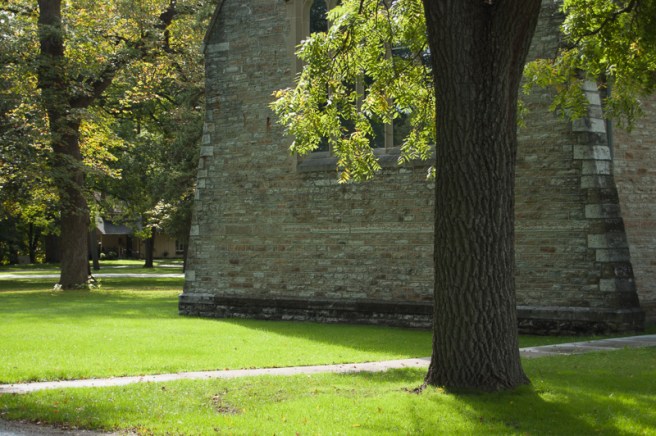
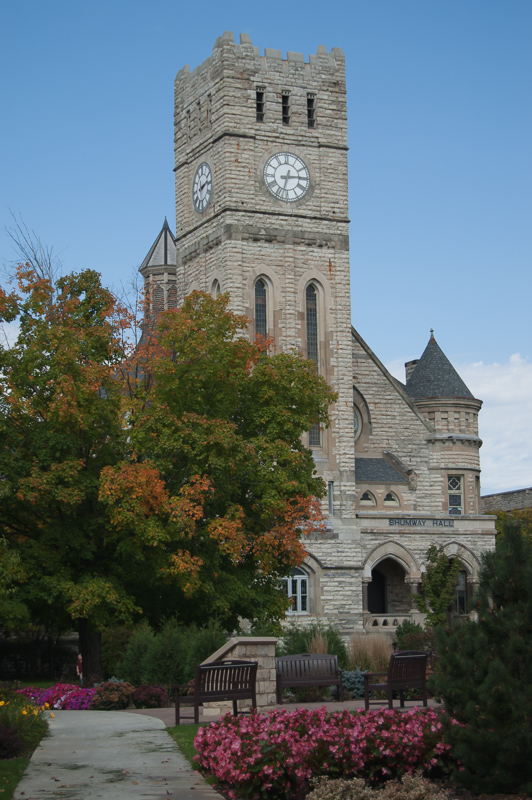
Faribault, Minnesota is a lovely, well preserved town, about one hour and a half straight south of Minneapolis/St. Paul. One of the earliest European settlements in Minnesota, it is filled with beautiful architecture, and prominent institutions.

dsc_3116-1
Map of Faribault

dsc_3055-1
Faribault Public Library

dsc_3111-1
Log Cabin, Rice County Historical Museum

dsc_3104-1
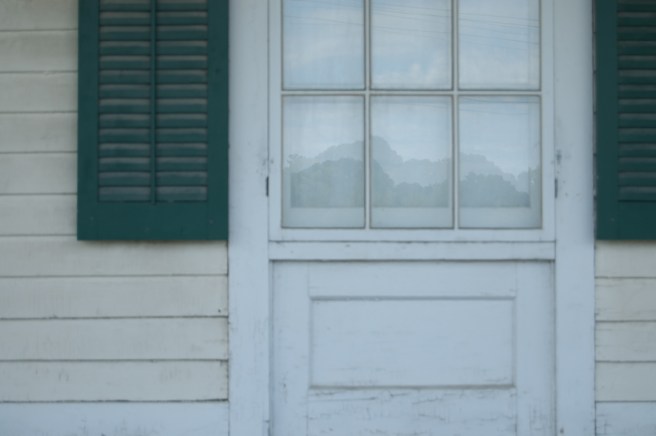
Alexander Faribault House

dsc_3103-1
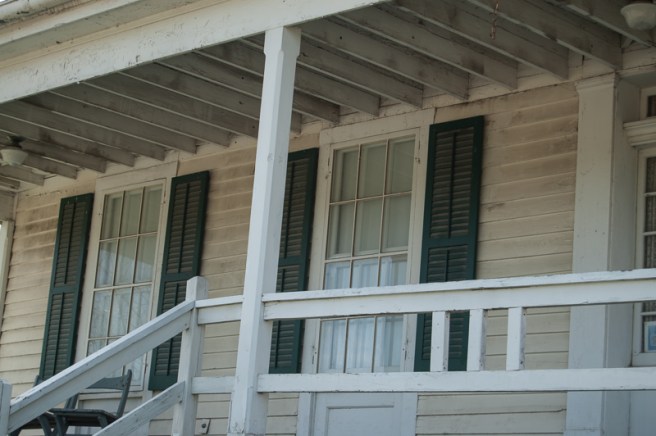
Alexander Faribault Home

dsc_3101-1
Alexander Faribault Home

dsc_3088-1
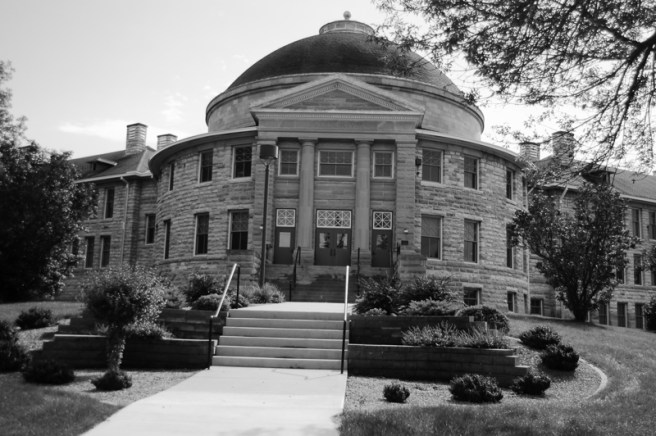
Academy For the Deaf Entry

dsc_3090-1
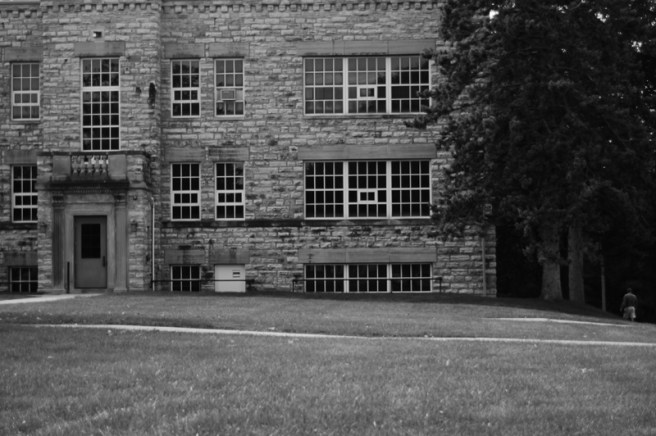
Academy for the Deaf

dsc_3092-1
Academy for the Deaf

dsc_3094-1
Academy for the Deaf

dsc_3095-1
State Academy For the Blind
dsc_3100-1

dsc_3086-1
Shattuck-St. Mary’s Private School

dsc_3080-1
St. Mary’s

dsc_3078-1
St. Mary’s

dsc_3071-1
Shumway Hall

dsc_3065-1
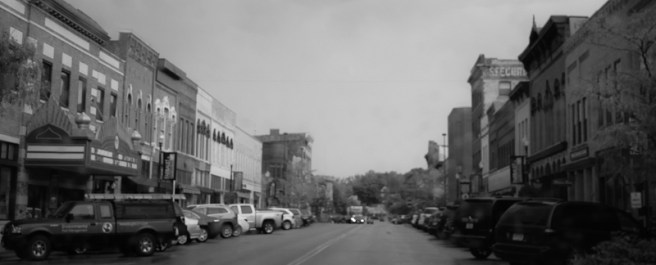
Store Front Main Street

dsc_3077-1
St. Mary’s

dsc_3063-1
Main Street Facade

dsc_3059-1
Historical District

dsc_3112-1
Log Cabin, Rice County Historical Center

dsc_3061-1
Main Street Facade in Historical District

dsc_3109-1
Episcopal Cathedral Tomb of Reverend Whipple, first Bishop of Faribault

dsc_3080-1-2
Entry to St. Mary’s

Memory as Tribute, in a Cosmic World

Written a  year ago…

This post is a tribute to Edward Albee, in the wake of his death, and to Ron Perrier, who was my Professor of Theatre at University of Wisconsin at River Falls, in 1974.  The two converge in my life. The course I studied with Ron, was related to the American Theatre. We read the greats, like Thornton Wilder, Tennessee Williams, and Eugene O’Neil, and yes, Edward Albee, who was just coming out as a very controversial playwright in the ’70’s. Mr. Albee was famous for “Who’s Afraid of Virginia Wolf”, “Zoo Story”, “A Delicate Balance” and many more. Ron directed “A Delicate Balance”, (now one of my favorite plays), for the RF summer theatre that same year.

Dr. Perrier opened my eyes to many facets of the world of the stage, but something very memorable was when he brought Edward Albee, en persona, as artist in residence, to River Falls, the same year I took the American Theatre course. We were to have read all of Albee’s current works, and to be ready to respond, when our visiting artist came to our very small class to speak. For me, as a small town 19 year old, Albee was pretty Avant-garde, and even though I participated in a limited way, I was aware something very important in the Arts, was going on.

Now that Albee is gone, Ron remains, as an emeritus professor at the university in St. Cloud, Minnesota, writing books, loving his students, and still involved in the theatre, as I understand it. I’m sure he’s touched many lives and opened the eyes of many students, other than myself. I’d like to remember him here, and show how cosmic the world really is, when memory is jogged, and to give credit to two very accomplished men.

May Edward Albee Rest in Peace.

Much Needed Rain

As the day commences and the gray skies roll in, on this mid September day, I have thoughtless nothingness rolling through my mind. A vague recollection of a sweet dream, brought on by night fall’s misty stars.  I try to wrap my mind around the blissful moment, but reality pushes out groggy sleep, to move onward with the tasks of the day. The vividness of the fantasy, moves ever further away, and I contemplate, that which comes next. The gray clouds loom over head, beckoning the arrival of much needed rain.

The Little Flower Dies

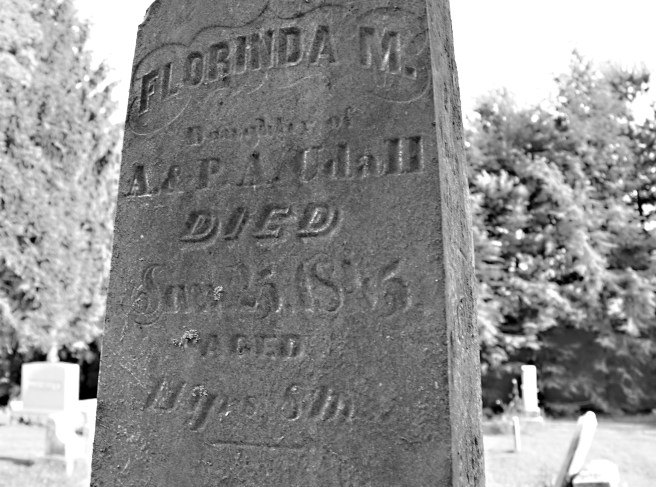
florinda-dsc_5576-2
Photo courtesy of David Dreimiller

Florinda Udall, born in May 1833, died at age 11 years and 8 months, on January 25th, 1845. She was the daughter of Alva and Phebe Udall, from Hiram, Ohio, and had one brother, named Edward.  She was a schoolmate of Lizzie Atwood Pratt and Lucretia Rudolph Garfield.

Lizzie Atwood records the death of Florinda in her diary, on January 24th, 1845, which is in conflict with the death date, on the stone:  “I spent the evening at Mr. Boyds.  Florinda Udall one of my schoolmates died of Bowel Complaint, after 6 days illness AE 11 years, and 8 months.” On the 26th she writes:  “Florinda was buried at the center of Hiram.”  The diary entry is true to the tone of Lizzie’s writing, which was matter of fact, and sparing of emotion.  This was the style of most of her writing.  At 12 years of age, she proved to be an objective observer of events that took place around her, in her village, and does this as well, in the case of Florinda’s illness and death.

Florinda’s name, comes from the word ‘flora,’ meaning ‘flower’ in Spanish, and is derived from Latin.  It must have been sad for family and friends, when their little flower died.

“A Day In The Life of Luna” ~ Revised

DSC_1592-1
Luna, at the Sea

Made a journey down a winding road, to see an old friend and a dog named Luna. Near the coast we stayed.  We listened to the not so distant waves come and go, in a rhythmic way.  The smell of salt was in the air.

The next morning, on a walk at the beach, the tilting fence post glistened in the sun, with sand at its feet. Budding rose bushes, splattered bits of red color upon the dunes.  The dynamic sea awaited the hustle and bustle of beachgoers, after Luna and her friends had their play.

In the afternoon, the sun beat down. Children frolicked at the shore with mother and father at their sides, building castles in the sand.  They felt unfettered, by the rough canine play, of the early morn.

What did Luna think, as she lay at home sleeping, mid-day?  There, she was dreaming of her four-legged pals, from whom she would steal balls and sticks, as they raucously rolled in the sand.  Then, swim!

In the hours, when the night had fallen, and twilight awoke, daybreak returned to summon Luna out to play.  Alone, she could not go. She rose, wagged her tail, and sniffed and licked the face of my sleepy friend.  She was begging to go to the ocean, where she would find her friends again; and so they did.

With every journey, there is something to be learned. On this one, it was knowing a day in the life of Luna, and the simple pleasures it brings.


Luna

DSC_1592-1
Luna, at the Sea

Made a journey down a winding road, to see an old friend, and a dog named Luna.  Near the ocean we stayed, watching the waves, come and go.

On the morning walk with the dogs at the beach, the tilting fence glistened in the sun, with sand at her feet, and budding rose bushes of the dunes scattered round.

Time was approaching the hustle and bustle of beachgoers.

The afternoon sun beat down, where the children frolicked at the shore, with mother and father at their sides.  They built castles in the sand, unfettered by the rough play of canines of the early morn.

What was Luna thinking, as she lay at home?

Luna spent the day, dreaming of her four legged friends, from whom she would steal balls and sticks, and of how they rolled raucously in the sand.

Then a swim!

Daybreak returned and Mother Nature called Luna back out to play.  Alone she could not go, so she got up and wagged her tail, and sniffed and licked the sleepy face of my friend, to start another day, all over again.

Journey

Wandering down a country road,

in search of clarity and purpose,

A man saw a barn.

It was a landmark in rural decline.

A place of broken dreams from the past.

The day was dismal, and stormy.

Forlorn thoughts clouded his mind.

He paused at the crossing,

and stood in the wind and the rain.

All around him, time was moving fast.